


Post Single
Posted by:
Comments:
Post Date:
Introduction
Asset loss and theft do not always result from a major security failure. Often, they begin with small gaps in visibility an asset moved without being recorded, damaged equipment left unattended, or an inspection issue that is never followed up. When these problems are discovered much later, it can be difficult to determine what happened.
Real-time visibility helps teams identify and address these issues earlier. By connecting asset information with inspections, site audits, tasks, work orders, and dashboards, organizations can document problems, assign responsibility, and take action before small gaps become costly losses.
Key Takeaways
- Real-time visibility helps identify asset-related issues earlier.
- Regular inspections help verify asset conditions and document problems.
- Photos and notes provide useful evidence for follow-up.
- Connected tasks and work orders help ensure issues are addressed.
- Dashboards give managers a clearer view of operational activity.
Why Asset Loss Is a Visibility Problem
Preventing asset loss involves more than physical security. Organizations also need to know what assets they have, where they should be, what condition they are in, and whether identified issues have been resolved.
For example, if equipment is damaged but the problem is not recorded, it may be difficult to know when the damage occurred or what action was taken. Similarly, when an asset is removed from service without updating its status, records can quickly become different from what is actually happening onsite.
This is why asset management should be part of everyday operations, not simply an inventory list.
Audits and Inspections as Early Warning Systems
Regular site audits and inspections give field teams an opportunity to spot issues before they become bigger problems. Employees can check equipment, storage areas, doors, locks, and other operational areas while documenting issues as they find them.
Digital inspections make this process easier. Teams can use checklists, add notes, and attach photographs instead of relying on memory or handwritten records. Over time, these records also help managers identify recurring problems and changes in asset condition.
Turning Findings Into Action
Finding a problem is only the beginning. Someone needs to take responsibility for fixing it.
With a connected workflow, an inspection finding can become a task or work order. An employee can document a damaged asset, attach a photo, create a work order, and assign it to the appropriate employee or vendor.
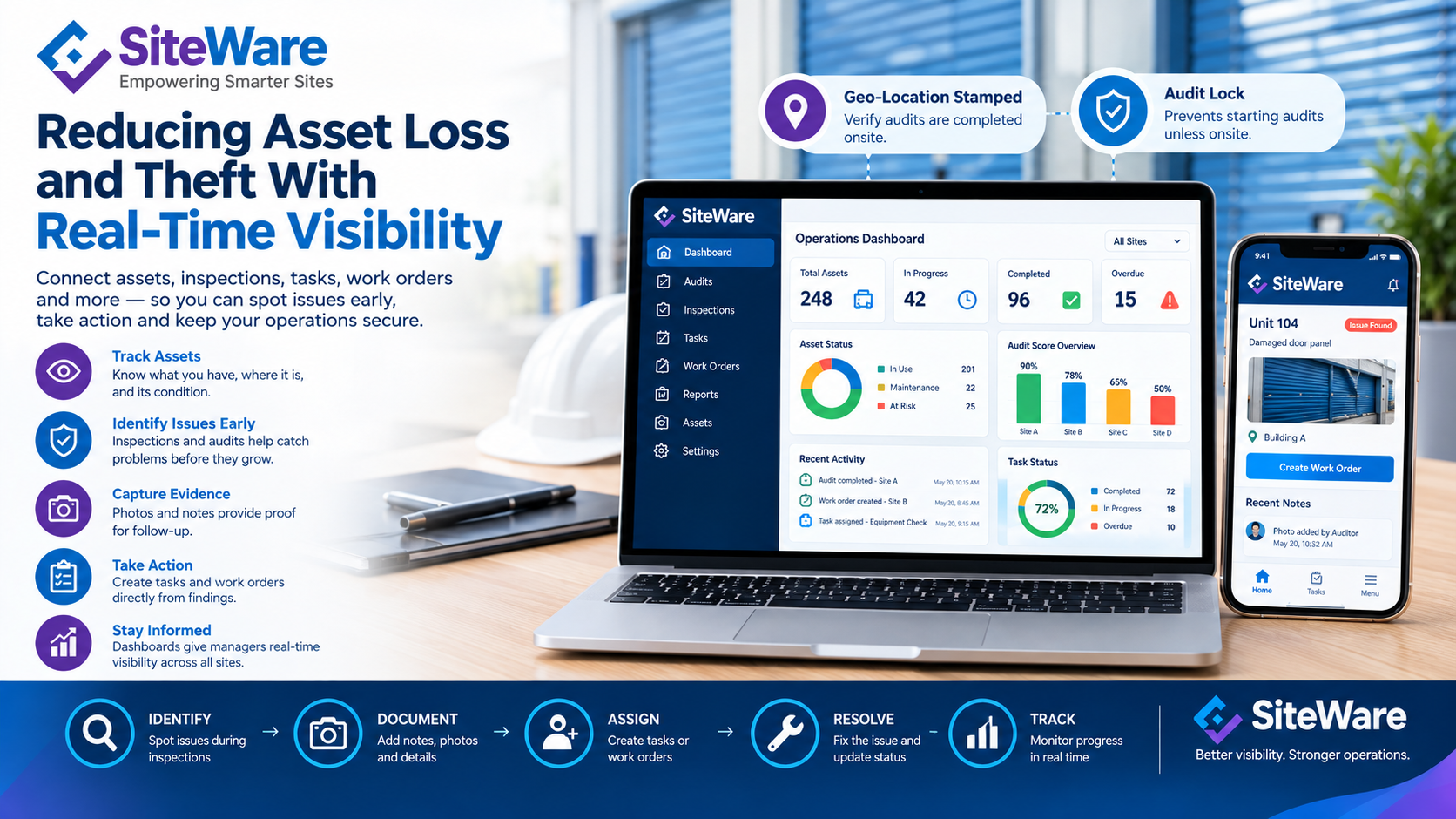
The process is simple: Identify → Document → Assign → Resolve → Track.
Keeping these steps connected reduces the chance that problems will be overlooked and helps teams respond before they lead to further damage or operational disruption.
Connecting Assets, Parts, and Maintenance
Asset management becomes more useful when it connects with maintenance activities. If a damaged asset contains usable components, those parts can be recorded as spare parts instead of being discarded.
For example, a damaged door may still have a working lock. The lock can be saved for use on another asset, while a work order can be created for the required repair.
This helps organizations make better use of existing resources while maintaining a clearer record of parts and maintenance activities.
Creating Management Visibility
Field teams deal with individual issues, but managers need to see the bigger picture. A centralized dashboard can bring site audits, assets, inspections, tasks, work orders, and reports together.
Managers can quickly identify outstanding work orders, unresolved findings, overdue tasks, recurring problems, and asset maintenance activity. Instead of waiting for a monthly report, they can use current information to decide what needs attention.
How SiteWare Supports Asset Loss Prevention
SiteWare connects asset management with the daily workflows used by storage organizations. Teams can manage assets, parts, vendors, and work orders while conducting site audits and inspections through the same platform.
During inspections, teams can add observations, upload photos, and create work orders for identified issues. These can be assigned to employees or vendors and tracked through completion. Dashboards and reports provide managers with visibility into site audits, tasks, work orders, and other operational activity, while authentication and authorization help control access to information.
SiteWare is not a dedicated theft-prevention system. Instead, it provides operational visibility that helps teams maintain accurate records, improve accountability, and respond to asset-related issues consistently.
Building a Stronger Prevention Strategy
Technology works best when it supports consistent processes. Organizations should regularly inspect assets, document issues, assign corrective work, and review unresolved tasks.
Using standardized checklists, photographs, clear task assignments, and regular reviews of open work orders helps teams maintain accountability. Comparing current conditions with previous inspections can also reveal recurring problems or changes that may otherwise go unnoticed.
Conclusion
Reducing asset loss and theft requires more than security measures or an inventory spreadsheet. Organizations need operational visibility that connects assets, inspections, problems, and follow-up actions.
When teams can see issues early, document what they find, assign responsibility, and track the work through resolution, they can reduce information gaps and respond more effectively. This creates a more accountable approach to protecting assets and maintaining reliable day-to-day operations.
