


Introduction
An effective site audit program is more than a compliance exercise. It helps organizations improve operations, reduce risk, and support continuous improvement across the business. Whether the goal is to evaluate existing processes, verify compliance, or identify operational gaps, a structured audit program provides the consistency needed to make better decisions. Without a clear process, audits often become time-consuming, inconsistent, and difficult to manage. Paper-based records, disconnected spreadsheets, and manual follow-ups can make it harder to track findings and ensure corrective actions are completed.
Modern site audit management platforms simplify the entire process by bringing planning, inspections, reporting, and corrective actions into one system. Instead of juggling multiple tools, organizations can oversee the entire audit life cycle from one platform. That usually boosts visibility and accountability, plus the turnaround time when issues need resolution.
Why Site Audit Programs Matter
Site audits help organizations determine whether processes, policies, and operational controls are working as expected. They provide an opportunity to identify risks early, improve compliance, and maintain operational standards before small issues become larger problems. A well-planned audit program also strengthens accountability across teams and encourages continuous improvement. Rather than treating audits as occasional inspections, organizations can use them as an ongoing process to improve performance, maintain quality, and build confidence among customers, employees, and stakeholders.
Key Takeaways
-
- Plan site audits using a structured schedule based on operational priorities.
- Standardize inspections with customizable audit checklists.
- Collect evidence digitally to improve accuracy and traceability.
- Convert audit findings into corrective actions with clear ownership..
- Use dashboards and reports to monitor progress and measure improvements.
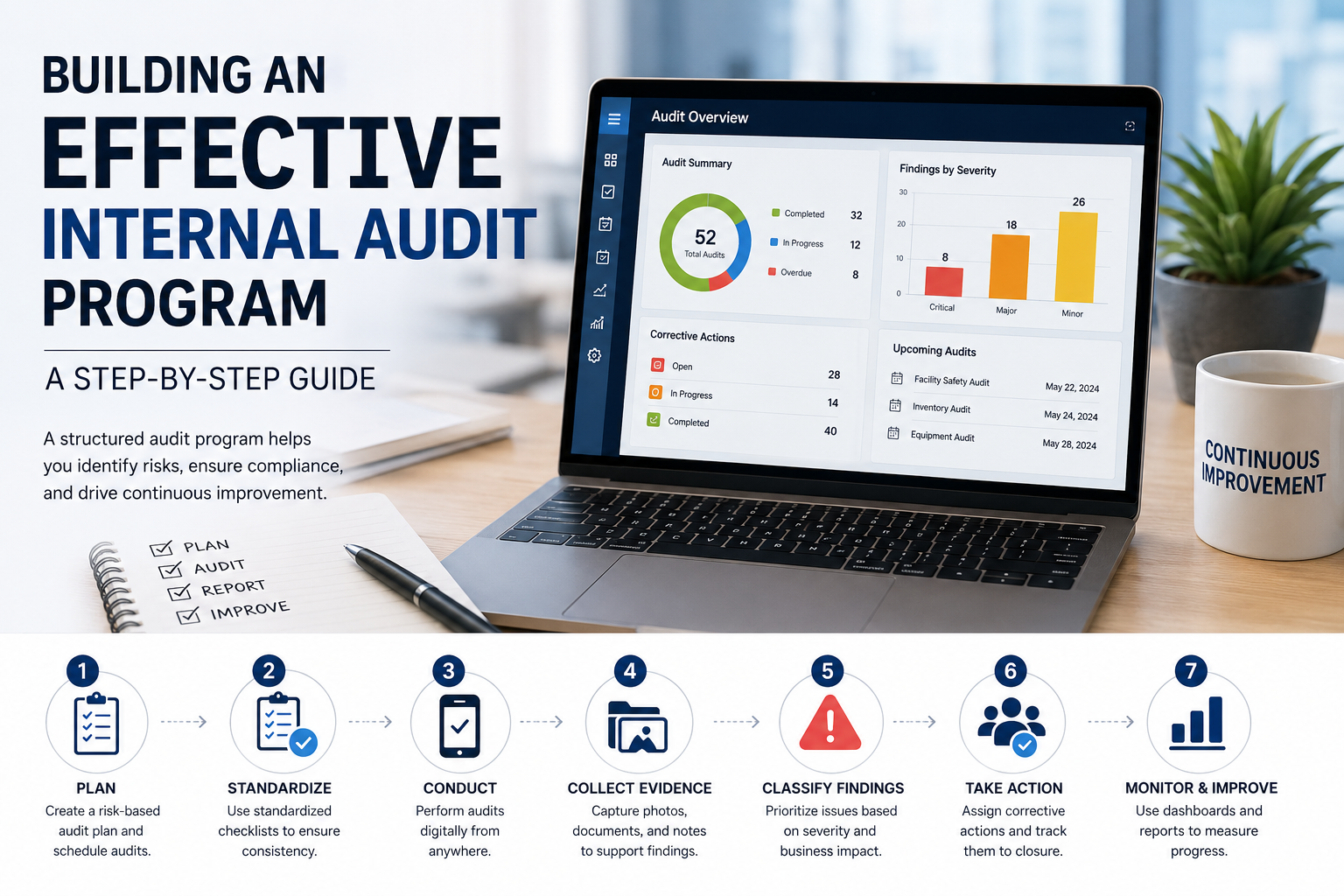
Step 1: Develop a Risk-Based Audit Plan
A successful audit program starts with a structured plan. Instead of auditing every process at the same frequency, organizations should prioritize audits based on operational risk. Areas with higher business impact may require more frequent reviews, while lower-risk activities can follow a different schedule. Annual, quarterly, monthly, or recurring audit schedules help ensure resources are focused where they add the most value. Digital audit platforms make this easier by allowing teams to schedule recurring audits, assign auditors, and maintain centralized audit calendars.
Step 2: Standardize Audits with Custom Checklists
Consistency is equally important during inspections. When different auditors follow different methods, results become difficult to compare. Standardized audit checklists help ensure every inspection follows the same criteria, whether it involves warehouse inspections, inventory verification, equipment checks, housekeeping reviews, or safety assessments. Reusable templates reduce preparation time while maintaining consistency across every audit.
Consistent, repeatable audits also provide a clear view of how each location is performing over time. Because every site is assessed using the same standards, organizations can compare performance across multiple locations, identify recurring issues, recognize top-performing sites, and share best practices where improvements are needed. Reusable templates also reduce preparation time while maintaining consistency across every audit.
Step 3: Conduct Audits Digitally
Conducting audits digitally further improves efficiency. Traditional paper-based inspections often create delays between field observations and reporting. Mobile audit applications allow inspectors to complete checklists, record observations, and document findings directly from a smartphone or tablet. Capturing information at the point of inspection improves accuracy, reduces manual work, and provides immediate access to site audit data, especially for organizations operating across multiple locations.
Step 4: Collect Evidence That Supports Findings
Supporting every finding with proper evidence is another essential part of an effective audit program. Written observations alone may not always provide enough context during reviews. Attaching photographs, documents, videos, and inspection comments helps validate findings and creates a clear record of what was observed. This additional context makes it easier for managers to understand issues and determine the appropriate response.
Step 5: Manage Non-Conformances Effectively
Not every audit finding carries the same level of risk, which is why organizations should classify non-conformances based on their severity. Critical issues may require immediate action because they affect safety or operations, while major findings need prompt attention to prevent further impact. Minor observations can often be addressed through routine improvement activities. Categorizing findings in this way helps organizations prioritize resources without losing visibility of lower-risk issues.
Step 6: Turn Findings into Corrective Actions
The real value of an audit comes from the actions taken after the inspection is complete. What you find has to turn into corrective actions, with clear responsibility by name, attainable deadlines, and an ongoing watch on progress. After the work is done, the corrective action should be checked again so you can be confident the issue is truly settled, or at least fully taken care of. In fact, a lot of audit management platforms make this part easier by letting you create work orders right from the audit findings, so there is less delay between spotting the trouble and actually doing something about it.
Step 7: Monitor Progress Through Dashboards and Reports
An audit inspection program should also provide ongoing visibility after inspections are complete. Dashboards and reports help managers monitor audit completion, corrective action status, compliance trends, task assignments, and overall operational performance. This information allows leadership teams to identify recurring issues, measure progress over time, and make informed decisions based on accurate operational data.
Conclusion
An effective Site audit program is built on consistency, accountability, and continuous improvement. By following a structured approach, from planning and standardized checklists to evidence collection, corrective actions, and performance monitoring, organizations can transform audits into valuable business improvement initiatives.
Modern audit management platforms strengthen this process by connecting planning, inspections, reporting, work order creation, and task management within a single workflow. Features such as customizable checklists, mobile auditing, evidence collection, automated task assignments, and interactive dashboards help organizations simplify audit management while maintaining high standards of quality and compliance.
The most successful audit programs do more than identify problems. They create a practical framework for resolving issues, improving processes, and supporting long-term operational excellence.
