


Post Single
Posted by:
Comments:
Post Date:
Introduction
The number of audits completed alone does not measure an effective audit program. Its true value lies in the insights it provides, the improvements it drives, and the risks it helps organizations prevent. Without meaningful performance metrics, organizations may conduct audits regularly but still struggle to determine whether their audit program is delivering real business value.
Key Performance Indicators (KPIs) transform audits from routine compliance activities into strategic tools for operational improvement. By tracking the right metrics, organizations can identify recurring issues, measure the effectiveness of corrective actions, compare site performance, and continuously improve operations.
Modern site audit management platforms simplify KPI tracking by bringing audits, dashboards, reports, tasks, work orders, and corrective actions into a centralized system, giving managers real-time visibility to support informed decision-making.
Key Takeaways
- Measure audit success using meaningful KPIs instead of simply counting completed audits.
- Track corrective actions and work order completion to ensure findings lead to measurable improvements.
- Compare performance across sites to identify high-performing locations and those needing additional support.
- Use dashboards and portfolio reports to monitor organization-wide performance.
- Review KPIs regularly to improve audit strategies and operational efficiency.
Why Site Audit KPIs Matter
Organizations invest significant time and resources in conducting audits, but collecting data alone does not improve operations. The real value comes from analyzing that information and using it to make informed decisions.
Well-defined KPIs provide objective measures of audit performance and help answer important questions.
Are audits completed on schedule?
Are recurring issues decreasing?
Which locations keep doing well, and where do they need extra help, support, or guidance?
Monitoring these metrics consistently provides a clearer picture of operational performance and helps organizations prioritize improvements based on measurable results.
Audit Completion Rate
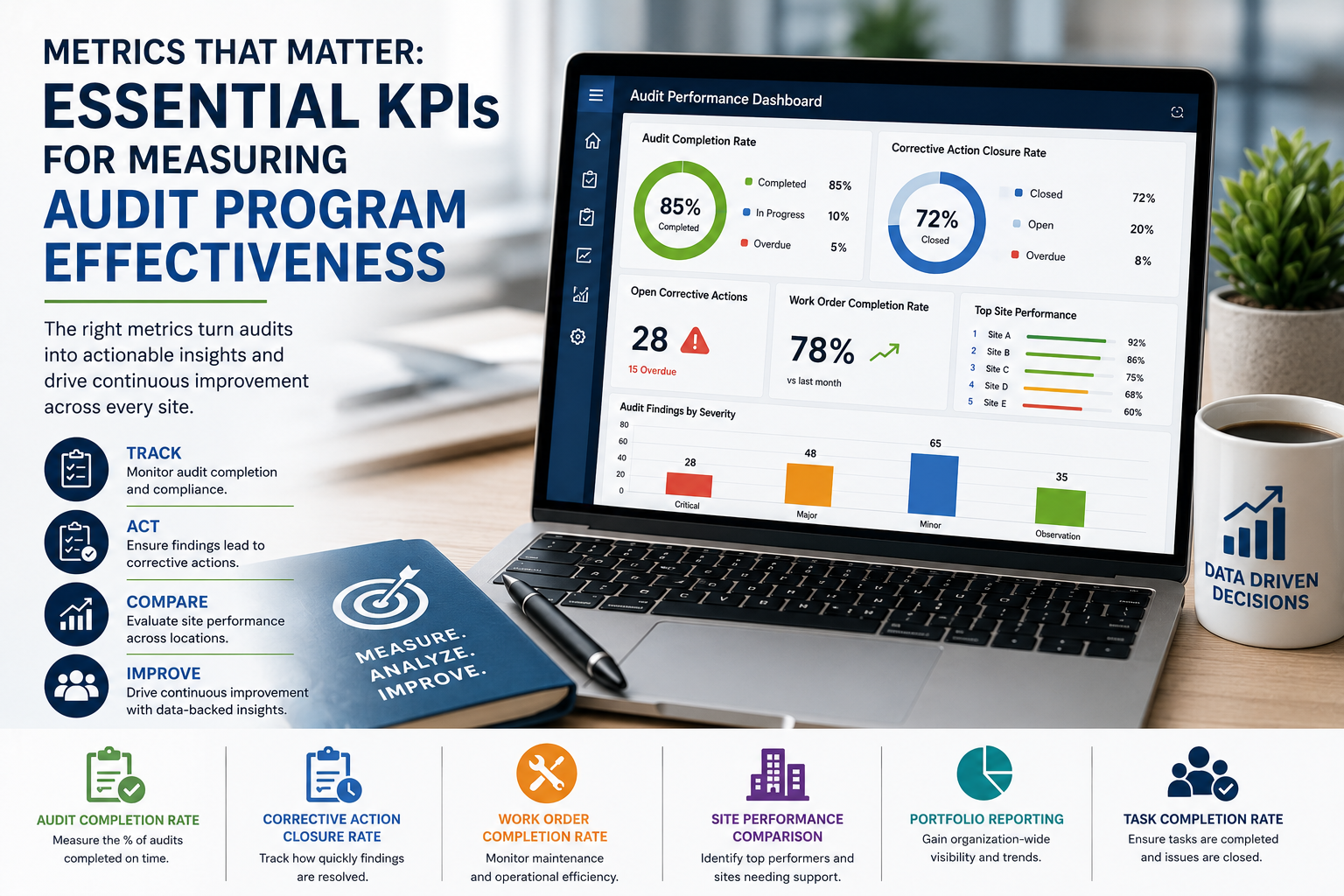
Audit Completion Rate measures the percentage of scheduled site audits completed within a specific period. A consistently high completion rate indicates that site audit schedules are being followed and compliance activities remain on track.
Frequent delays or missed audits may highlight resource constraints, scheduling issues, or operational bottlenecks. Monitoring this KPI also helps ensure every facility receives the planned level of oversight.
Corrective Action and Work Order Performance
A site audit only creates value when findings result in meaningful improvements. Tracking corrective actions ensures that identified issues result in measurable improvements.
Useful KPIs include Corrective Action Closure Rate, Average Time to Close Findings, Work Order Completion Rate, and Outstanding Corrective Actions. For example, if an inspection identifies a damaged storage unit door, generating a work order immediately helps ensure the issue is resolved promptly. Measuring closure times provides valuable insight into operational responsiveness.
Site Performance Comparison
Organizations managing multiple facilities often experience differences in operational performance. Comparing sites using standardized audit metrics helps identify strengths, recurring issues, and opportunities for improvement.
Site Performance Comparison reports allow managers to evaluate audit scores, compliance trends, corrective actions, and overall consistency across locations. These comparisons help recognize high-performing sites while providing targeted support to facilities that need improvement.
Portfolio-Level Reporting
While site-level reports provide operational detail, leadership teams need a broader view of performance across the organization.
Portfolio reports consolidate audit information from multiple locations into a single dashboard, making it easier to identify long-term compliance trends, recurring operational issues, and resource requirements. This organization-wide visibility supports better planning and more informed business decisions.
Measuring Task Completion and Operational Efficiency
Many audit findings require follow-up tasks before issues can be fully resolved. Tracking Task Completion Rate helps measure how efficiently teams complete assigned responsibilities, while monitoring work order progress provides insight into maintenance performance.
Together, these metrics ensure audit findings move efficiently from identification to resolution rather than remaining unresolved.
How SiteWare Helps Measure Audit Performance
A successful Site audit program depends on accurate data and clear visibility into performance. SiteWare provides a centralized, mobile-friendly platform that helps organizations monitor key audit KPIs.
With SiteWare, organizations can monitor audit completion, compare site performance, analyze portfolio-wide trends, and manage audits, work orders, tasks, and checklist templates from one platform. Mobile inspections, evidence collection, work order generation, corrective action assignments, and interactive dashboards help organizations measure performance using meaningful KPIs instead of isolated data.
Conclusion
An effective audit program is built on more than completed inspections. KPIs such as Audit Completion Rate, Corrective Action Closure Rate, Work Order Completion Rate, Site Performance Comparison, and Portfolio Reporting provide meaningful insights that support continuous improvement.
Modern audit inspection management platforms make these metrics readily available through interactive dashboards and comprehensive reports, enabling organizations to move from reactive problem-solving to proactive performance management. By consistently tracking the right KPIs, businesses can strengthen compliance, improve accountability, optimize resources, and build a culture of continuous improvement. Ultimately, the metrics that matter most are those that turn audit data into informed decisions and lasting operational excellence.
