


Introduction: Bridging Visibility and Action in Asset Management
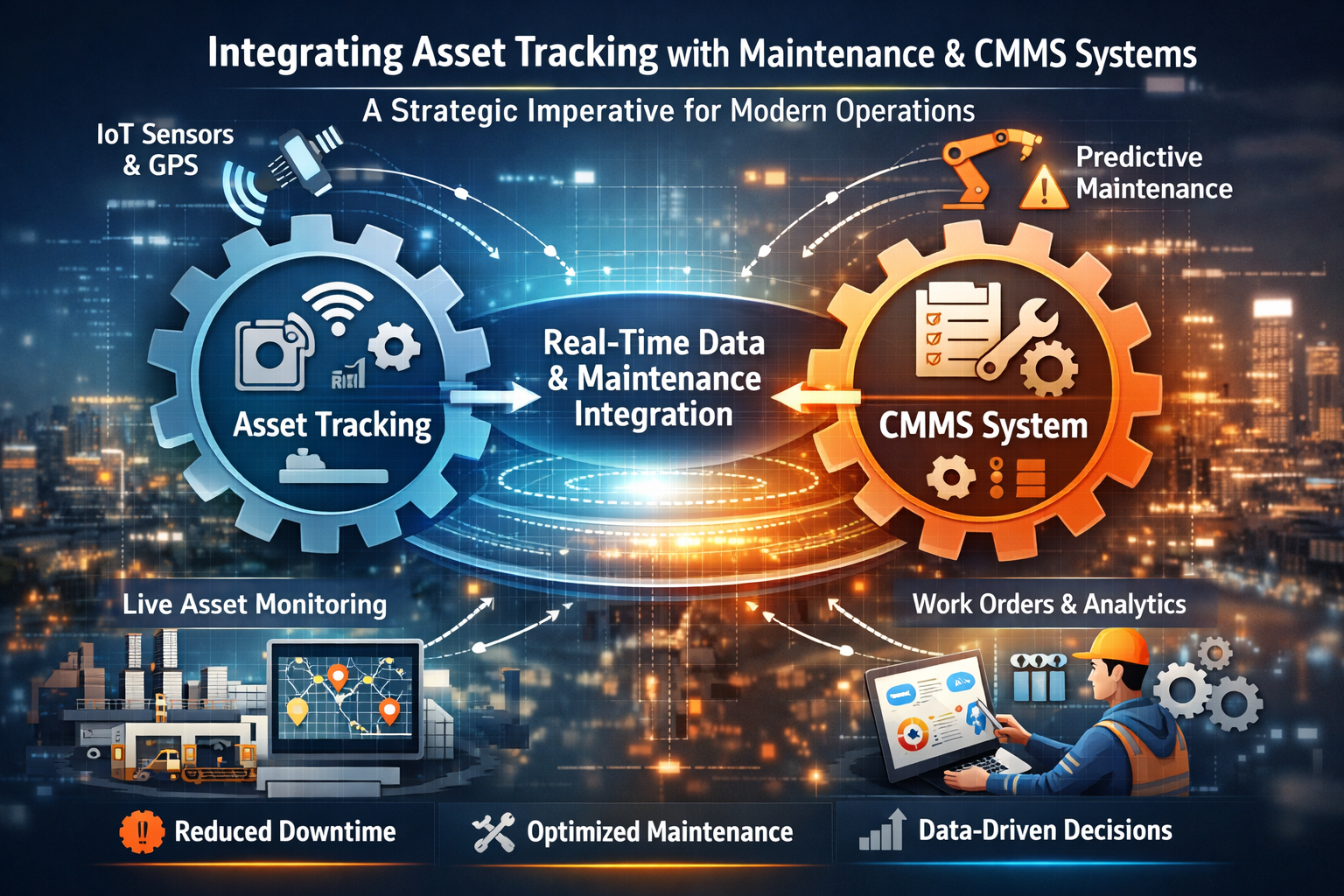
Businesses that depend on tangible assets increasingly realize that action, not just visibility, creates value. While computerized maintenance management systems (CMMS) allow for organized maintenance procedures, asset tracking systems offer real-time location and status data. However, companies lose out on chances to maximize performance, cut downtime, and manage expenses when these systems function independently. Integrating asset tracking with CMMS and maintenance systems fills this gap by connecting real-time asset intelligence with actionable maintenance processes. This integration transforms raw data into meaningful insights that teams can use immediately. This convergence is becoming more and more necessary as industries transition to digital transformation.
Understanding the Core Components of Integration
Asset tracking systems track the location, state, and use of assets using technologies like RFID, GPS, and Internet of Things sensors. These systems produce constant streams of data that represent the behavior of assets in real-world settings. In contrast, CMMS platforms concentrate on planning, monitoring, and maximizing maintenance tasks. They maintain asset performance records, maintenance histories, and work orders in an organized manner. Organizations that combine these two technologies create a cohesive ecosystem where asset data flows seamlessly into maintenance processes. Because of this connectedness, maintenance personnel are always working with the most up-to-date and pertinent data. Organizations might therefore switch from reactive to proactive maintenance tactics.
Operational Benefits: From Reactive Fixes to Predictive Maintenance
Organizations can transcend conventional break-fix maintenance models through integration. Real-time asset tracking data can trigger automated maintenance notifications when it exceeds predetermined criteria. A key machine’s temperature sensor, for instance, can alert the CMMS to create a work order before overheating causes failure. This proactive strategy increases asset longevity and decreases unscheduled downtime. Additionally, instead of using set schedules, maintenance teams can prioritize work based on the actual state of the assets. This minimizes needless maintenance tasks and enhances resource allocation. Organizations eventually acquire the capacity to apply predictive maintenance techniques that depend on data trends rather than conjecture.
Data-Driven Decision-Making and Performance Optimization
A rich dataset that integrates operational, historical, and real-time data is provided by integrated systems. Organizations are able to analyze asset performance more thoroughly and accurately thanks to this data. Managers are able to pinpoint persistent problems, evaluate the efficacy of maintenance, and maximize asset use. For example, analyzing utilization trends may reveal that some assets are overworked while others are underutilized. This insight supports better capital planning and asset allocation decisions. Furthermore, companies may more efficiently monitor critical performance metrics like mean time to repair (MTTR) and mean time between failures (MTBF). When these measurements represent current circumstances rather than static records, they gain greater significance.
Implementation Challenges and Practical Solutions
Despite its advantages, there are a number of difficulties when integrating asset tracking with CMMS systems. Data compatibility issues often arise because different systems use varying formats and standards. To facilitate smooth data communication, organizations need to invest in middleware or APIs. Data accuracy and dependability present another difficulty since subpar input can result in bad maintenance choices. Organizations should put strong data validation and governance procedures in place to handle this. Because staff may be reluctant to embrace new procedures and technologies, change management is also crucial. Provide sufficient training and demonstrate clear value to overcome this resistance. Attempting a full-scale integration all at once is frequently less successful than a staggered implementation strategy.
Security, Scalability, and Future-Proofing Considerations
Integration increases data flow across systems and raises concerns about cybersecurity and data privacy. Organizations must put in place robust access restrictions and make sure their systems adhere to pertinent security standards. A secure integration approach must include encryption, authentication procedures, and frequent security audits. Another crucial factor is scalability, particularly for businesses looking to introduce new technologies or grow their asset base. Future expansion should be supported by the integration architecture without necessitating a major redesign. When compared to on-premises systems, cloud-based CMMS platforms frequently offer more flexibility and scalability. Organizations can optimize the long-term benefits of their integration initiatives by making plans for the future.
Industry Applications and Real-World Impact
The advantages of integrated asset monitoring and CMMS systems have already started to become apparent in sectors like manufacturing, logistics, healthcare, and energy. IoT-enabled sensors are used by industrial organizations to automatically initiate maintenance tasks and check the health of their equipment. Logistics companies use real-time fleet vehicle tracking to plan maintenance based on miles and usage. To guarantee availability and adherence to safety regulations, healthcare organizations keep an eye on vital medical equipment. Integrated systems are used by businesses in the energy sector to manage geographically scattered assets like wind turbines and pipelines. These illustrations show how integration improves operational effectiveness in a variety of settings. They also emphasize how this strategy may be tailored to various industry demands.
Conclusion: Turning Integration into Competitive Advantage
A strategic move toward more intelligent asset management is represented by the integration of asset tracking with maintenance and CMMS technologies. By converting data into quantifiable results, it helps organizations link visibility with action. Although there are organizational and technical difficulties during the integration process, the long-term advantages greatly exceed the initial work. Businesses that use this strategy can enhance asset performance overall, minimize downtime, and optimize maintenance. More significantly, they set themselves up to take advantage of cutting-edge technologies like advanced analytics and artificial intelligence. This integration is more than just a technology advancement in a competitive and asset-rich environment; it is a vital component of operational excellence and company resiliency.

Introduction: Bridging Visibility and Action in Asset Management
Businesses that depend on tangible assets increasingly realize that action, not just visibility, creates value. While computerized maintenance management systems (CMMS) allow for organized maintenance procedures, asset tracking systems offer real-time location and status data. However, companies lose out on chances to maximize performance, cut downtime, and manage expenses when these systems function independently. Integrating asset tracking with CMMS and maintenance systems fills this gap by connecting real-time asset intelligence with actionable maintenance processes. This integration transforms raw data into meaningful insights that teams can use immediately. This convergence is becoming more and more necessary as industries transition to digital transformation.
Understanding the Core Components of Integration
Asset tracking systems track the location, state, and use of assets using technologies like RFID, GPS, and Internet of Things sensors. These systems produce constant streams of data that represent the behavior of assets in real-world settings. In contrast, CMMS platforms concentrate on planning, monitoring, and maximizing maintenance tasks. They maintain asset performance records, maintenance histories, and work orders in an organized manner. Organizations that combine these two technologies create a cohesive ecosystem where asset data flows seamlessly into maintenance processes. Because of this connectedness, maintenance personnel are always working with the most up-to-date and pertinent data. Organizations might therefore switch from reactive to proactive maintenance tactics.
Operational Benefits: From Reactive Fixes to Predictive Maintenance
Organizations can transcend conventional break-fix maintenance models through integration. Real-time asset tracking data can trigger automated maintenance notifications when it exceeds predetermined criteria. A key machine’s temperature sensor, for instance, can alert the CMMS to create a work order before overheating causes failure. This proactive strategy increases asset longevity and decreases unscheduled downtime. Additionally, instead of using set schedules, maintenance teams can prioritize work based on the actual state of the assets. This minimizes needless maintenance tasks and enhances resource allocation. Organizations eventually acquire the capacity to apply predictive maintenance techniques that depend on data trends rather than conjecture.
Data-Driven Decision-Making and Performance Optimization
A rich dataset that integrates operational, historical, and real-time data is provided by integrated systems. Organizations are able to analyze asset performance more thoroughly and accurately thanks to this data. Managers are able to pinpoint persistent problems, evaluate the efficacy of maintenance, and maximize asset use. For example, analyzing utilization trends may reveal that some assets are overworked while others are underutilized. This insight supports better capital planning and asset allocation decisions. Furthermore, companies may more efficiently monitor critical performance metrics like mean time to repair (MTTR) and mean time between failures (MTBF). When these measurements represent current circumstances rather than static records, they gain greater significance.
Implementation Challenges and Practical Solutions
Despite its advantages, there are a number of difficulties when integrating asset tracking with CMMS systems. Data compatibility issues often arise because different systems use varying formats and standards. To facilitate smooth data communication, organizations need to invest in middleware or APIs. Data accuracy and dependability present another difficulty since subpar input can result in bad maintenance choices. Organizations should put strong data validation and governance procedures in place to handle this. Because staff may be reluctant to embrace new procedures and technologies, change management is also crucial. Provide sufficient training and demonstrate clear value to overcome this resistance. Attempting a full-scale integration all at once is frequently less successful than a staggered implementation strategy.
Security, Scalability, and Future-Proofing Considerations
Integration increases data flow across systems and raises concerns about cybersecurity and data privacy. Organizations must put in place robust access restrictions and make sure their systems adhere to pertinent security standards. A secure integration approach must include encryption, authentication procedures, and frequent security audits. Another crucial factor is scalability, particularly for businesses looking to introduce new technologies or grow their asset base. Future expansion should be supported by the integration architecture without necessitating a major redesign. When compared to on-premises systems, cloud-based CMMS platforms frequently offer more flexibility and scalability. Organizations can optimize the long-term benefits of their integration initiatives by making plans for the future.
Industry Applications and Real-World Impact
The advantages of integrated asset monitoring and CMMS systems have already started to become apparent in sectors like manufacturing, logistics, healthcare, and energy. IoT-enabled sensors are used by industrial organizations to automatically initiate maintenance tasks and check the health of their equipment. Logistics companies use real-time fleet vehicle tracking to plan maintenance based on miles and usage. To guarantee availability and adherence to safety regulations, healthcare organizations keep an eye on vital medical equipment. Integrated systems are used by businesses in the energy sector to manage geographically scattered assets like wind turbines and pipelines. These illustrations show how integration improves operational effectiveness in a variety of settings. They also emphasize how this strategy may be tailored to various industry demands.
Conclusion: Turning Integration into Competitive Advantage
A strategic move toward more intelligent asset management is represented by the integration of asset tracking with maintenance and CMMS technologies. By converting data into quantifiable results, it helps organizations link visibility with action. Although there are organizational and technical difficulties during the integration process, the long-term advantages greatly exceed the initial work. Businesses that use this strategy can enhance asset performance overall, minimize downtime, and optimize maintenance. More significantly, they set themselves up to take advantage of cutting-edge technologies like advanced analytics and artificial intelligence. This integration is more than just a technology advancement in a competitive and asset-rich environment; it is a vital component of operational excellence and company resiliency.